Mindless
Mindless is an AI-powered Moodle extension that assists students with learning and assignments. It functions as a learning companion, helping users master difficult concepts and navigate coursework more efficiently. Despite having some user base, Mindless lacked a dedicated platform to scale. The task was to design a high-converting landing page that clearly articulates the product’s value to new users while addressing the delicate balance between AI-driven efficiency and academic integrity.
Industry
Concept project for an early-stage product
Scope of work
UI/UX Designer
Duration
Conversion-focused landing page, Content structure & information hierarchy


Challanges
Based on user feedback, I identified key problems to solve:
Immediate clarity needed: Students under deadline pressure have zero patience—if value isn't obvious in 3 seconds, they leave.
Fear of consequences: Deep-seated anxiety about "getting caught" creates a massive psychological barrier to installation.
AI distrust: Skepticism about AI handling specific course materials makes users hesitant for high-stakes tests.
Visual credibility gap: "Corporate" design feels untrustworthy; "meme-driven" feels unreliable for serious studying.
Feature overload risk: Multi-feature nature (AI + collective answers + Moodle integration) could overwhelm at first glance.
The challenge: Reframe a complex product into a clear, student-oriented narrative that instantly communicates value, addresses ethical fears, and fits naturally into the Moodle ecosystem.
Based on user feedback, I identified key problems to solve:
Immediate clarity needed: Students under deadline pressure have zero patience—if value isn't obvious in 3 seconds, they leave.
Fear of consequences: Deep-seated anxiety about "getting caught" creates a massive psychological barrier to installation.
AI distrust: Skepticism about AI handling specific course materials makes users hesitant for high-stakes tests.
Visual credibility gap: "Corporate" design feels untrustworthy; "meme-driven" feels unreliable for serious studying.
Feature overload risk: Multi-feature nature (AI + collective answers + Moodle integration) could overwhelm at first glance.
The challenge: Reframe a complex product into a clear, student-oriented narrative that instantly communicates value, addresses ethical fears, and fits naturally into the Moodle ecosystem.
Based on user feedback, I identified key problems to solve:
Immediate clarity needed: Students under deadline pressure have zero patience—if value isn't obvious in 3 seconds, they leave.
Fear of consequences: Deep-seated anxiety about "getting caught" creates a massive psychological barrier to installation.
AI distrust: Skepticism about AI handling specific course materials makes users hesitant for high-stakes tests.
Visual credibility gap: "Corporate" design feels untrustworthy; "meme-driven" feels unreliable for serious studying.
Feature overload risk: Multi-feature nature (AI + collective answers + Moodle integration) could overwhelm at first glance.
The challenge: Reframe a complex product into a clear, student-oriented narrative that instantly communicates value, addresses ethical fears, and fits naturally into the Moodle ecosystem.

Goals
The goal of this project was to design a landing page that clearly and confidently presents a complex AI product as a safe, reliable study tool, helping students quickly understand its value and take action without hesitation.
The design focused on clarity, trust, and conversion — simplifying feature-heavy information, addressing academic integrity concerns through transparent communication, and creating a tone that feels both relatable and credible. The final objective was to guide users through a clear, low-friction path from first impression to installation.
The goal of this project was to design a landing page that clearly and confidently presents a complex AI product as a safe, reliable study tool, helping students quickly understand its value and take action without hesitation.
The design focused on clarity, trust, and conversion — simplifying feature-heavy information, addressing academic integrity concerns through transparent communication, and creating a tone that feels both relatable and credible. The final objective was to guide users through a clear, low-friction path from first impression to installation.
The goal of this project was to design a landing page that clearly and confidently presents a complex AI product as a safe, reliable study tool, helping students quickly understand its value and take action without hesitation.
The design focused on clarity, trust, and conversion — simplifying feature-heavy information, addressing academic integrity concerns through transparent communication, and creating a tone that feels both relatable and credible. The final objective was to guide users through a clear, low-friction path from first impression to installation.
Design Solution
Tone of Voice
To balance youthful energy with professional trust, I replaced corporate jargon with a conversational, humorous tone that speaks directly to student struggles. By utilizing relatable language, slang and memes, the design establishes an immediate emotional connection with the audience.
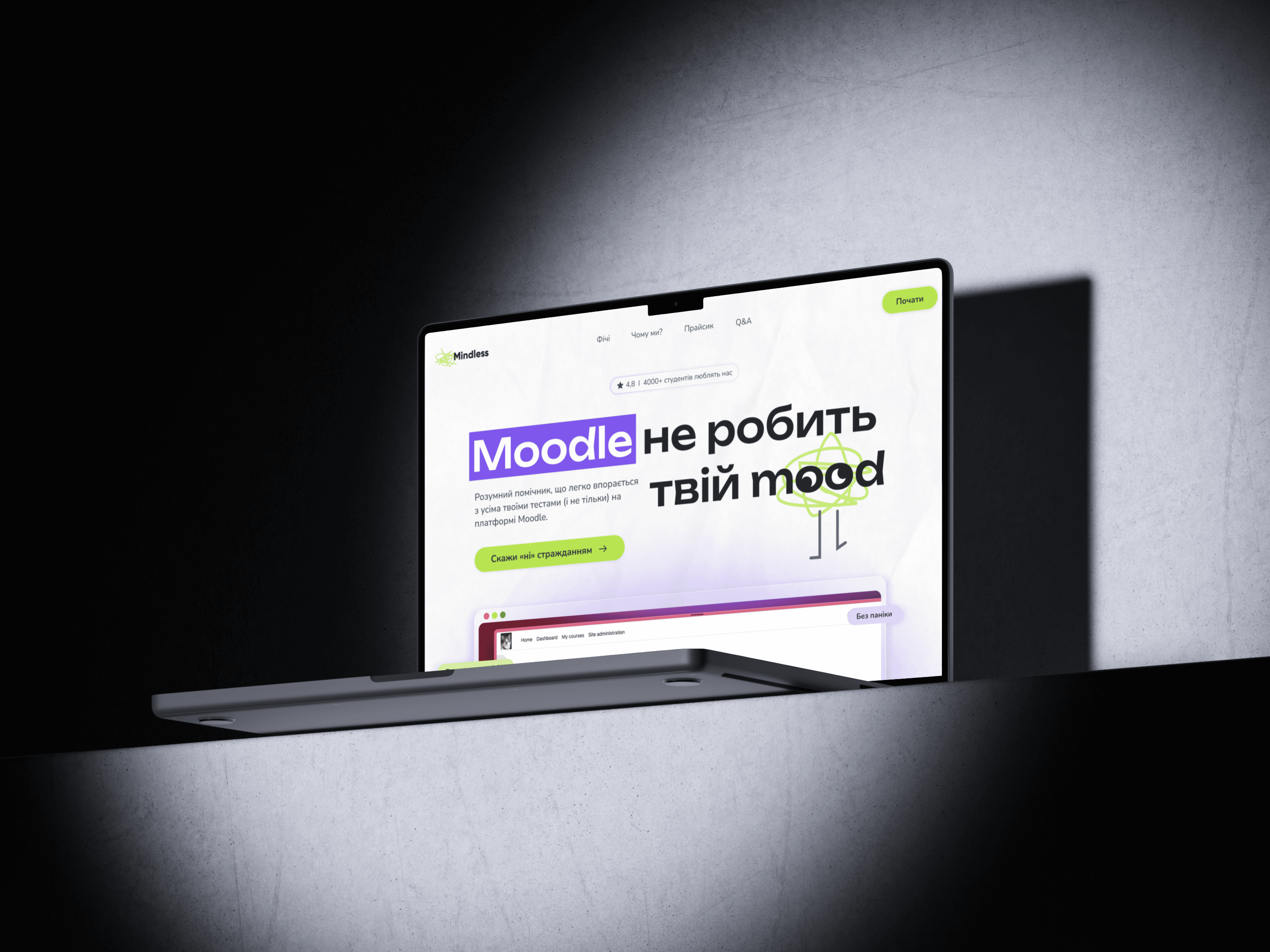
The strategy focused on translating technical features into clear benefits, using wordplay like *"*Moodle не робить твій mood" to stay approachable without sacrificing functional clarity. To maintain academic credibility, this informal voice was anchored by data, statistics, and testimonials. Ultimately, the copy ensures Mindless feels like a tool made by students, for students, rather than a faceless marketing campaign.
To balance youthful energy with professional trust, I replaced corporate jargon with a conversational, humorous tone that speaks directly to student struggles. By utilizing relatable language, slang and memes, the design establishes an immediate emotional connection with the audience.
The strategy focused on translating technical features into clear benefits, using wordplay like *"*Moodle не робить твій mood" to stay approachable without sacrificing functional clarity. To maintain academic credibility, this informal voice was anchored by data, statistics, and testimonials. Ultimately, the copy ensures Mindless feels like a tool made by students, for students, rather than a faceless marketing campaign.
Structure
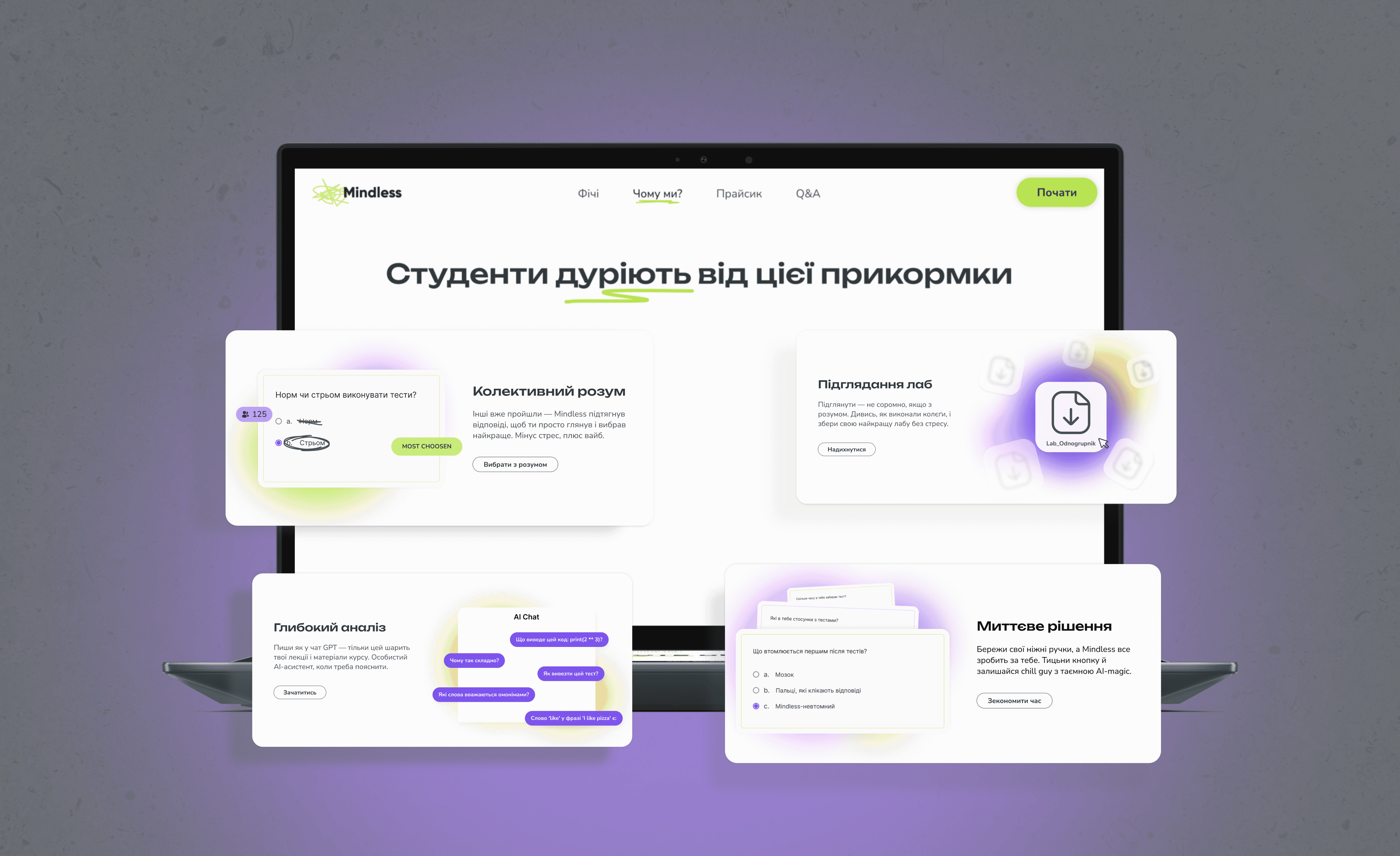
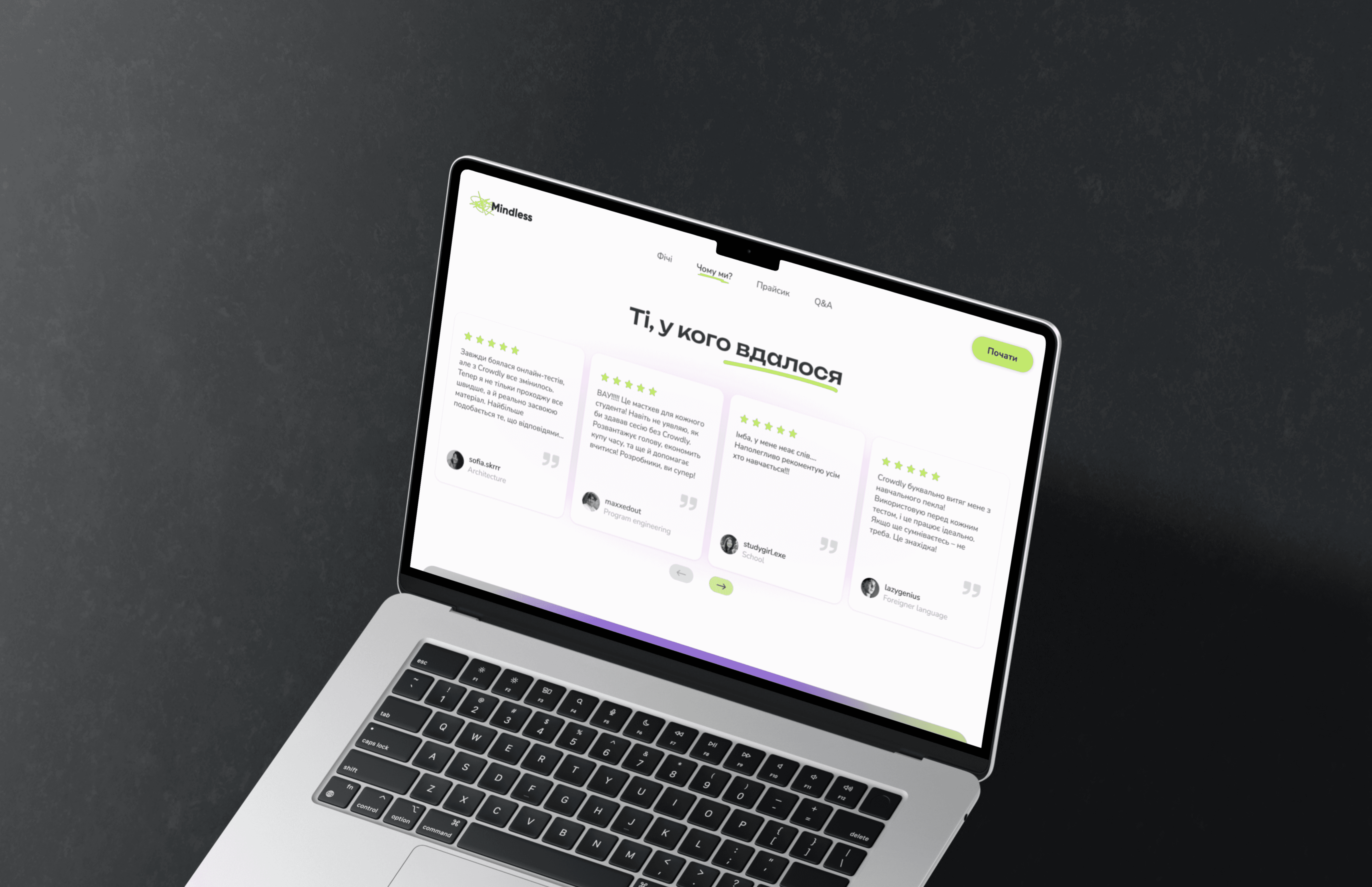
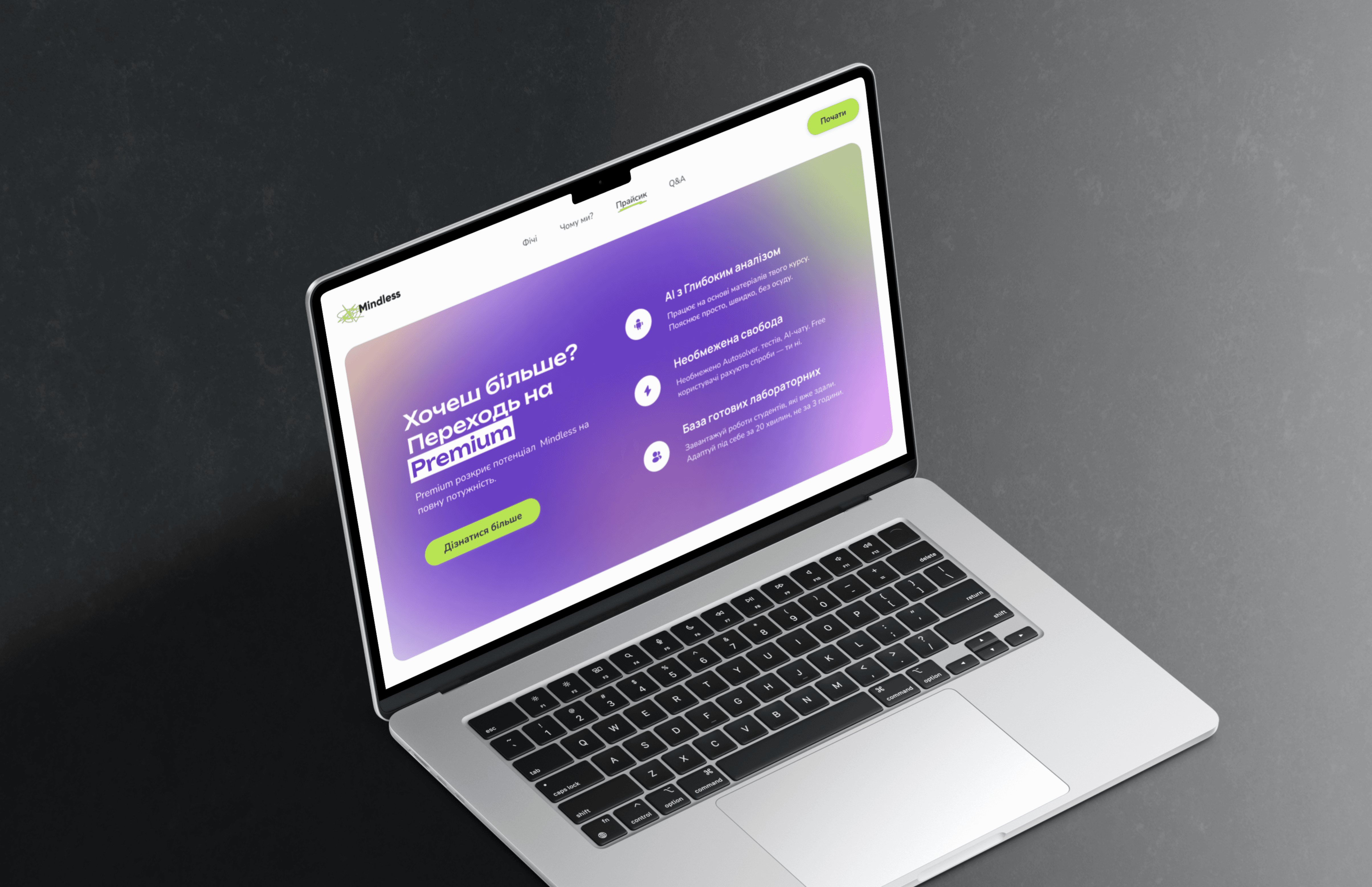
The landing page follows a strategic conversion funnel: problem awareness → solution demonstration → social proof → feature showcase → premium upgrade. The narrative-driven structure opens with an immediate pain point and guides users through decision-making stages with multiple CTAs placed at key moments, allowing to convert whenever they're ready.
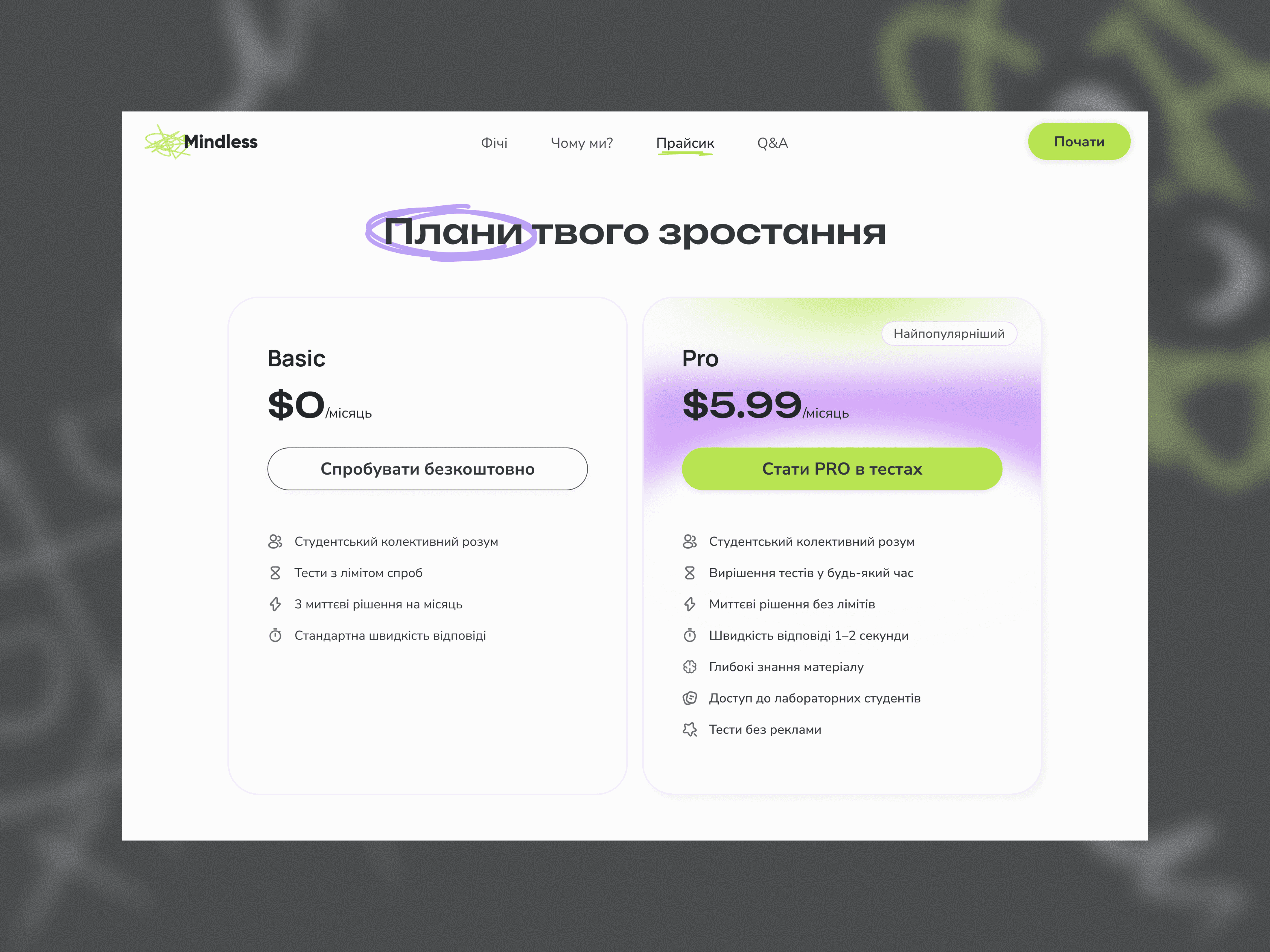
The design employs multiple psychological triggers for conversion: social proof throughout, scarcity and urgency, value-based pricing with a freemium model that lowers entry barriers, and gamification through the referral program.
The structure ensures progressive disclosure of information, building confidence before asking for commitment or payment.
The landing page follows a strategic conversion funnel: problem awareness → solution demonstration → social proof → feature showcase → premium upgrade. The narrative-driven structure opens with an immediate pain point and guides users through decision-making stages with multiple CTAs placed at key moments, allowing to convert whenever they're ready.
The design employs multiple psychological triggers for conversion: social proof throughout, scarcity and urgency, value-based pricing with a freemium model that lowers entry barriers, and gamification through the referral program.
The structure ensures progressive disclosure of information, building confidence before asking for commitment or payment.
CTA logic
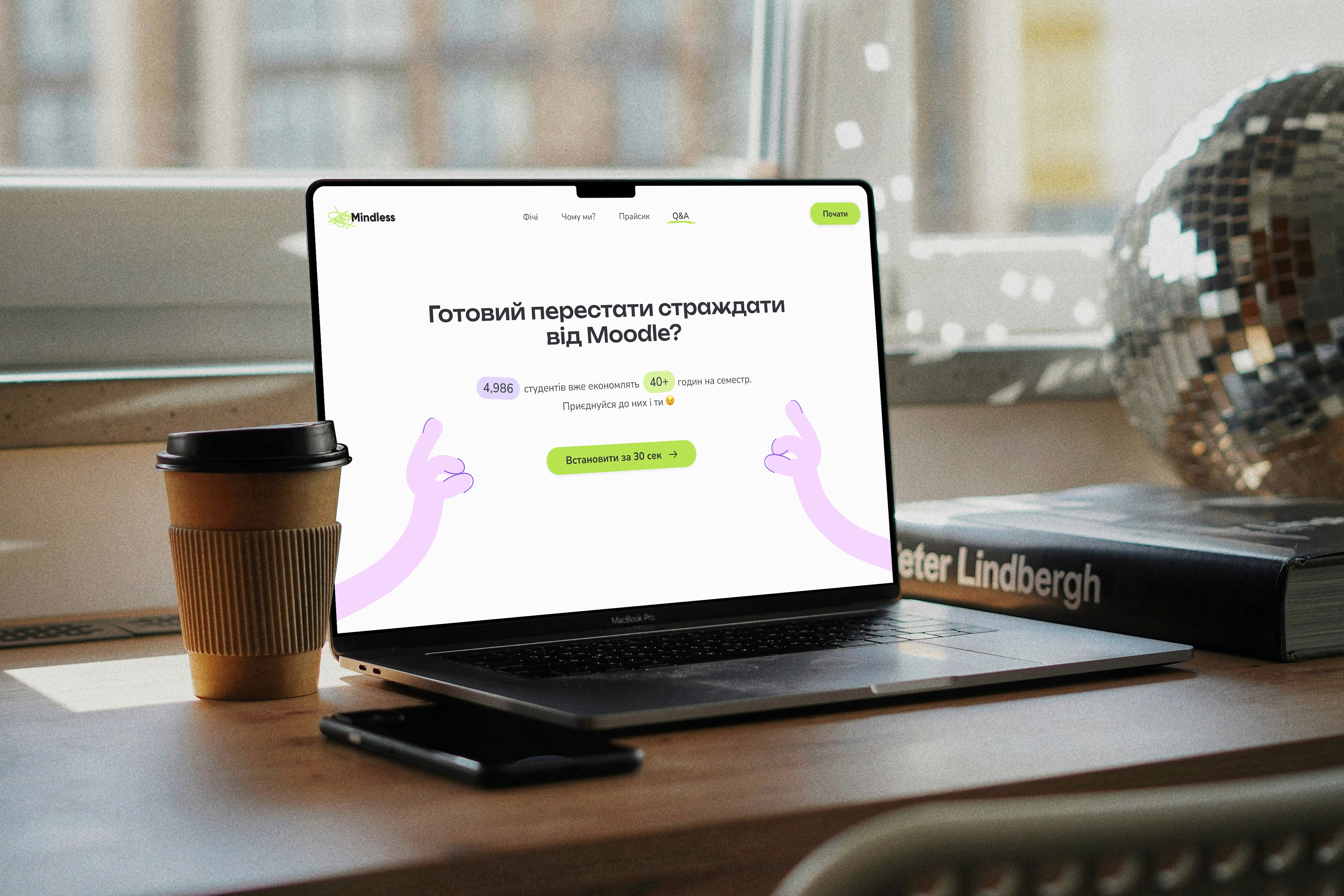
To ensure high conversion without causing decision paralysis, the landing page utilizes a strategic CTA hierarchy focused on a single conversion path. By maintaining one primary action—installing the extension—the structure provides multiple touchpoints tailored to the user’s journey.
The CTA strategy evolves with the user’s psychological state: starting with emotional, pain-focused triggers, transitioning to low-commitment language after the features, and concluding with a frictionless time promise to eliminate final hesitation. This ensures a consistent, persuasive flow that encourages action at every stage of the scroll.
To ensure high conversion without causing decision paralysis, the landing page utilizes a strategic CTA hierarchy focused on a single conversion path. By maintaining one primary action—installing the extension—the structure provides multiple touchpoints tailored to the user’s journey.
The CTA strategy evolves with the user’s psychological state: starting with emotional, pain-focused triggers, transitioning to low-commitment language after the features, and concluding with a frictionless time promise to eliminate final hesitation. This ensures a consistent, persuasive flow that encourages action at every stage of the scroll.
Visual direction
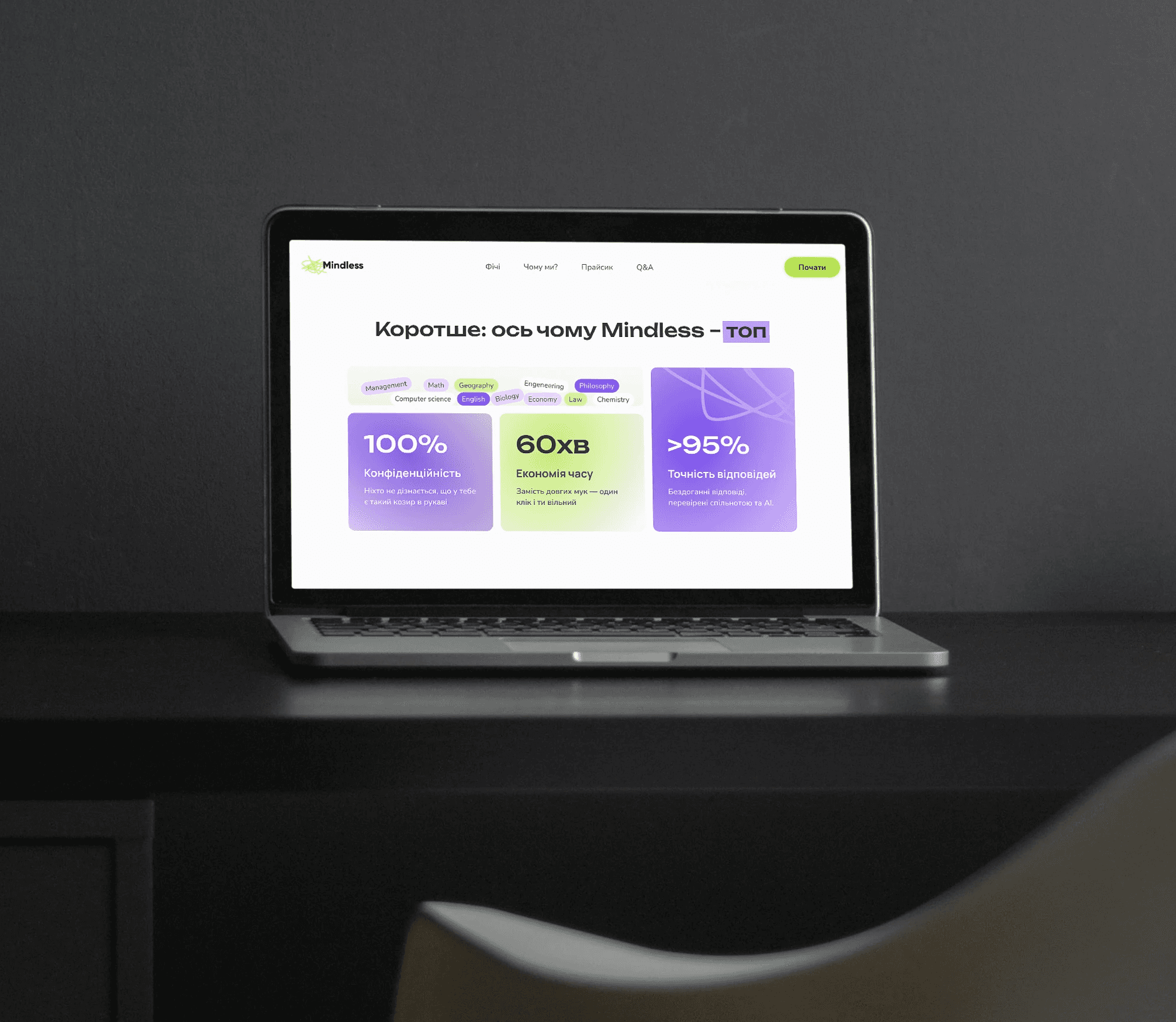
The main task when creating the design was to look modern and student-friendly. The purple-blue gradient establishes tech credibility and sophistication, while the vibrant lime green adds energy and drives action. This combination balances a "serious academic tool" persona with a youthful, approachable aesthetic tailored to students.
I integrated hand-drawn doodles and highlights to evoke a familiar learning atmosphere. The pen-style scribbles as playful character accents add a human touch, making the interface feel like a relatable study companion rather than just a technical tool.
The result is a Gen Z-focused aesthetic that balances youthful energy with professional credibility through clean layouts and real product visuals.
The main task when creating the design was to look modern and student-friendly. The purple-blue gradient establishes tech credibility and sophistication, while the vibrant lime green adds energy and drives action. This combination balances a "serious academic tool" persona with a youthful, approachable aesthetic tailored to students.
I integrated hand-drawn doodles and highlights to evoke a familiar learning atmosphere. The pen-style scribbles as playful character accents add a human touch, making the interface feel like a relatable study companion rather than just a technical tool.
The result is a Gen Z-focused aesthetic that balances youthful energy with professional credibility through clean layouts and real product visuals.